Introduction
Turmeric has been an essential part of Indian life for centuries, valued not only as a spice but also for its role in traditional practices and wellness. Among the many varieties grown in India, Salem Turmeric is highly regarded for its rich colour, strong aroma, and high quality. Cultivated in the Salem region of Tamil Nadu, this variety benefits from favourable soil conditions and a suitable climate. These natural advantages, along with traditional farming knowledge, help produce turmeric that contains good levels of curcumin, the compound responsible for its color and beneficial properties. The journey of Salem Turmeric from farm to finished product is a detailed and carefully managed process. Each stage, from planting to packaging, plays an important role in maintaining quality and consistency.

Preparing the Land and Planting
The cultivation process begins with proper land preparation. Farmers plough the fields multiple times to loosen the soil and improve its structure. Organic manure is often added to enrich the soil with nutrients. Healthy turmeric rhizomes are selected and cut into smaller pieces to be used as seed material. These are planted in rows with proper spacing to ensure that each plant receives enough sunlight, water, and nutrients. This stage is important because the quality of planting directly affects the final yield and overall quality of the turmeric.
Growth and Crop Care
Once planted, the turmeric crop begins its growth cycle. Green shoots appear above the soil and develop into leafy plants over time. During this phase, farmers regularly monitor the field to ensure healthy growth. Adequate irrigation is necessary, as turmeric requires consistent moisture. Farmers also remove weeds and take preventive measures against pests and diseases. Traditional farming techniques, combined with modern practices, help maintain crop health. The crop typically takes seven to nine months to mature. During this time, the rhizomes develop beneath the soil while the leaves support growth through photosynthesis.
Harvesting the Crop
Harvesting begins when the plants reach maturity, indicated by yellowing and drying leaves. Farmers carefully dig around the plants to remove the turmeric rhizomes from the soil. This process requires attention to avoid damage to the rhizomes. Once harvested, the turmeric is cleaned to remove soil and other impurities. At this stage, the turmeric is still raw and requires further processing before it can be used.
Processing and Boiling
After harvesting, the turmeric undergoes an important processing stage. The rhizomes are washed thoroughly to remove any remaining dirt. They are then boiled in large containers. Boiling improves the colour, reduces the raw smell, and enhances the shelf life of turmeric. It also helps develop the characteristic yellow colour that is widely recognised in the market. This step is essential for preparing the turmeric for drying and further processing.
Drying and Polishing
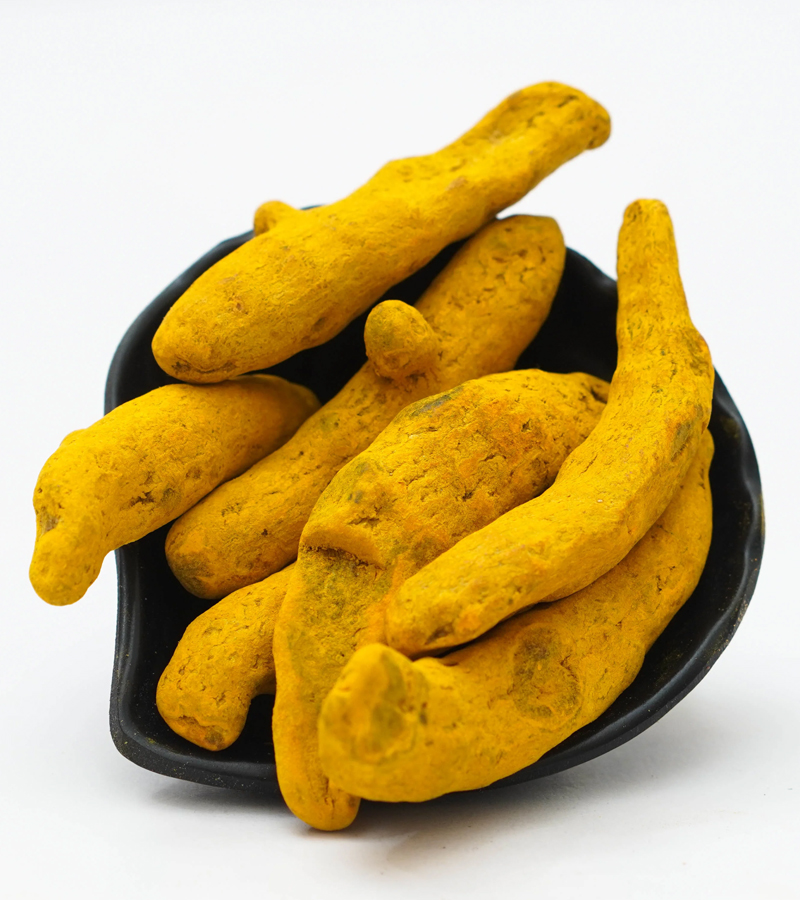
Following the boiling process, the turmeric is spread out under sunlight to dry. This stage may take 10 to 15 days depending on weather conditions. Drying reduces the moisture content and hardens the rhizomes, making them suitable for storage and grinding. Proper drying is critical, as excess moisture can affect quality. Once dried, the turmeric is sometimes polished to improve its appearance. Polishing removes the rough outer layer and gives the turmeric a cleaner and more uniform look.
Grinding and Production
The dried turmeric is transported to processing units where it is cleaned again using machines. These machines remove dust and small particles to ensure purity. The turmeric is then ground into fine powder using modern equipment. This process helps retain its natural colour and aroma. The powder is sieved to achieve a smooth texture and consistent quality.In many cases, quality checks are conducted to measure parameters such as colour, moisture content, and curcumin levels.
Packaging and Market Distribution
Once processed, the turmeric powder is packed using food-grade materials. Packaging is designed to protect the product from moisture and contamination. Different packaging sizes are prepared for various markets. Small packs are used for household consumption, while bulk packaging is supplied to industries and exporters. From processing units, the product is distributed to retailers, food manufacturers, and international markets, ensuring that it reaches consumers in good condition.
Conclusion
The journey of Salem Turmeric from cultivation to consumption reflects a combination of tradition, care, and modern processing techniques. Each stage in this process contributes to the final quality of the product. Farmers, processors, and distributors all play an important role in delivering turmeric that meets the needs of both domestic and global markets. With its rich colour, natural properties, and wide range of uses, Salem Turmeric continues to be an important part of the spice industry.

Authentic spices sourced straight
from trusted Indian farms.

Sun-dried, lab-tested, and
globally compliant.

Skilled women ensuring precision and consistency.

Serving buyers across UAE, USA,
UK & beyond.
Indian Spice Exports © 2026 All Rights Reserved. Developed by Aaruhi software solutions